
Azure Health Models × PUXD
UX Researcher & Project Lead · Aug 2025 - Dec 2025
The Basics
A team of 7 UX Design students at varying stages of the program collaborated on a UX research and design project focused on improving the usability and experience of Microsoft Azure’s health visualization tool. The project ran from August to December 2025.
My role
- Project lead
- Primary and secondary research
- User interviews
- Ideating and sketching
- Wireframing and prototyping
The Problem
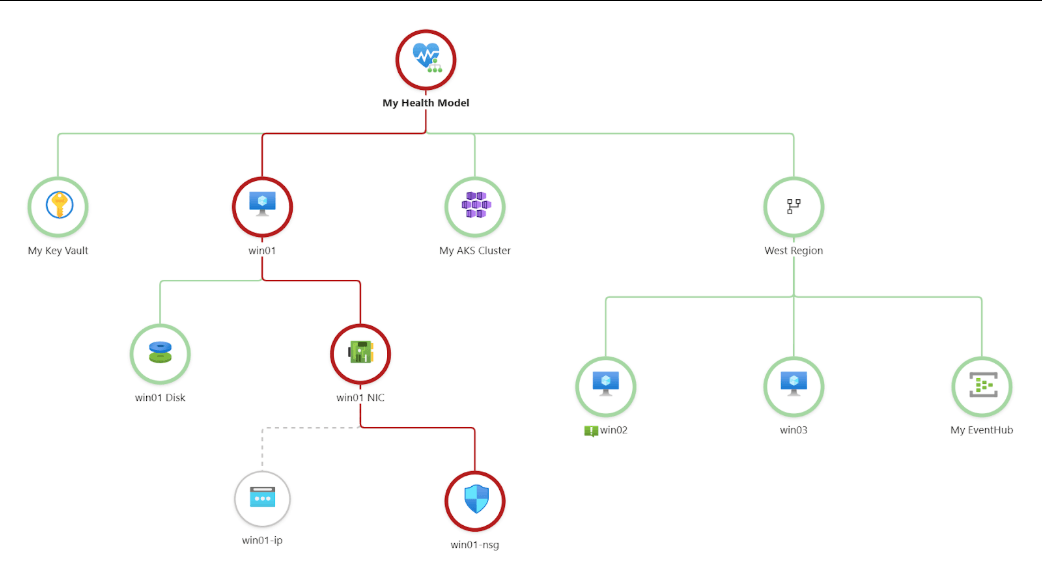
Azure Health Models lets users visualize the health of their application ecosystem through three color-coded statuses, helping them quickly understand node relationships and identify struggling platforms. Day-to-day tasks such as adding entities, configuring signals, and editing elements often felt fragmented and time-consuming, for both new users learning the system and experienced users trying to move efficiently through it.
We were really designing for two different audiences at once. Experienced users wanted depth, control, and efficient workflows they could customize, while new users needed a simple, discoverable path into the system with clear, guided onboarding. Meeting both meant reducing friction for newcomers without stripping away the power and customization experienced users relied on.
What We Designed
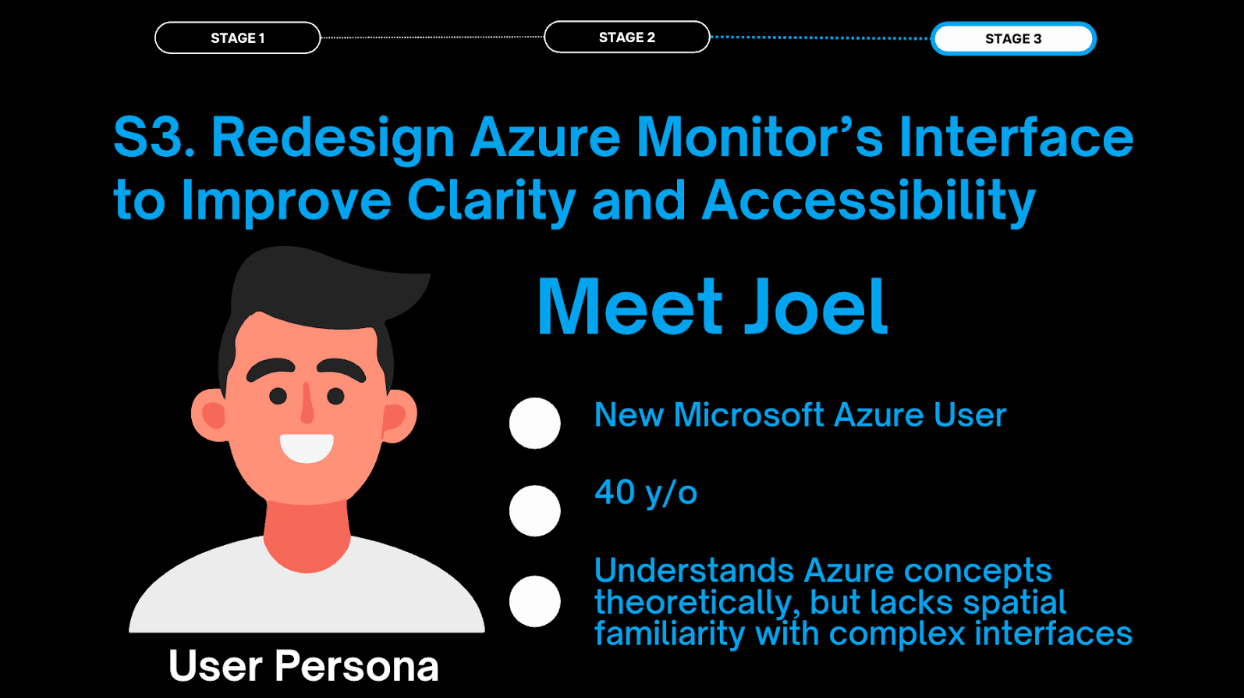
We interviewed users, walked through existing workflows, and gathered sponsor feedback to identify and prioritize the pain points worth solving. To ground our recommendations, we built a persona named Joel, an experienced Azure user managing a large application ecosystem, and mapped his existing flow to pinpoint where he got stuck.
From there, we iterated on prototypes across two rounds of usability testing before delivering a final, validated design to Microsoft.
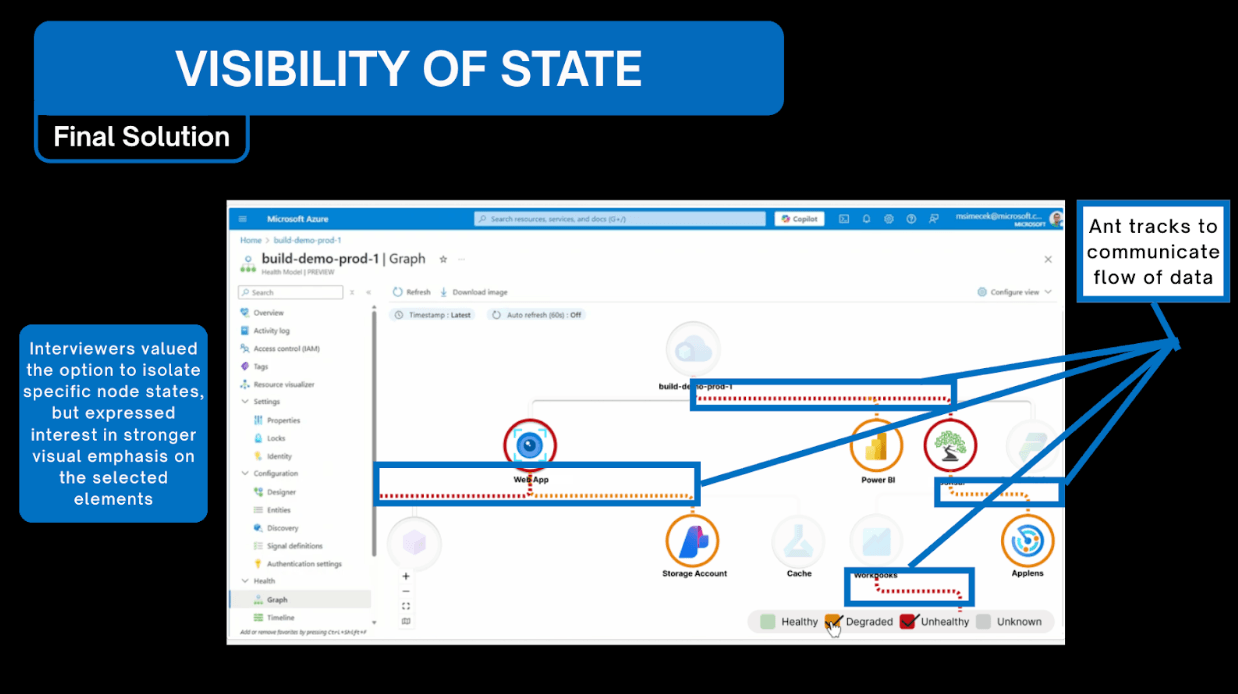
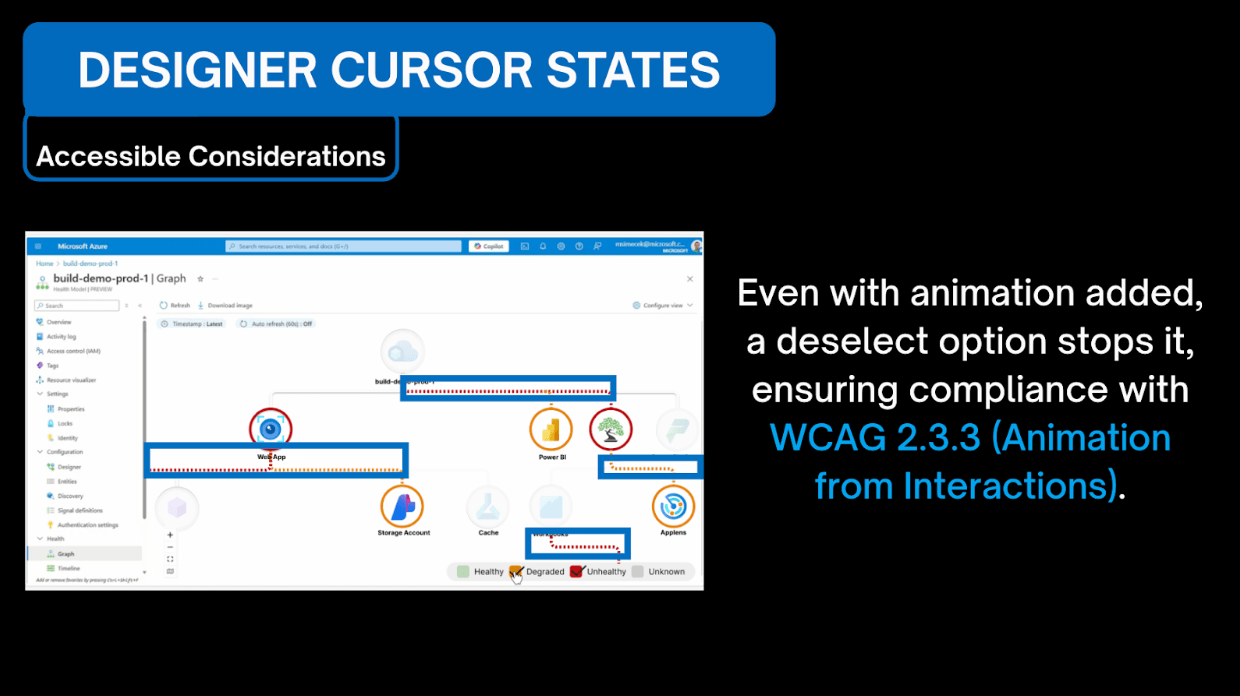
Accessibility was a consideration throughout, and we confirmed each design component met baseline WCAG criteria before handoff.
Looking Back
Partway through the semester, our original sponsor stepped away from the project, and I had to help the team adjust to new stakeholders and shifting priorities without losing sight of our core goals. It was also the first time I carried full responsibility for leading a team for an entire semester. Looking back, I learned that effective leadership isn’t about having all the answers, it’s about providing the support that helps a team keep moving forward together.
This project also closed a loop for me. Almost two years after my first Experience Studio, I ended my time at Purdue the way I started it, on a Microsoft-sponsored project, this time leading rather than learning the ropes.