
Next Gen CASA Reports with MIC
UX Designer · Aug 2024 - Dec 2024
The Basics
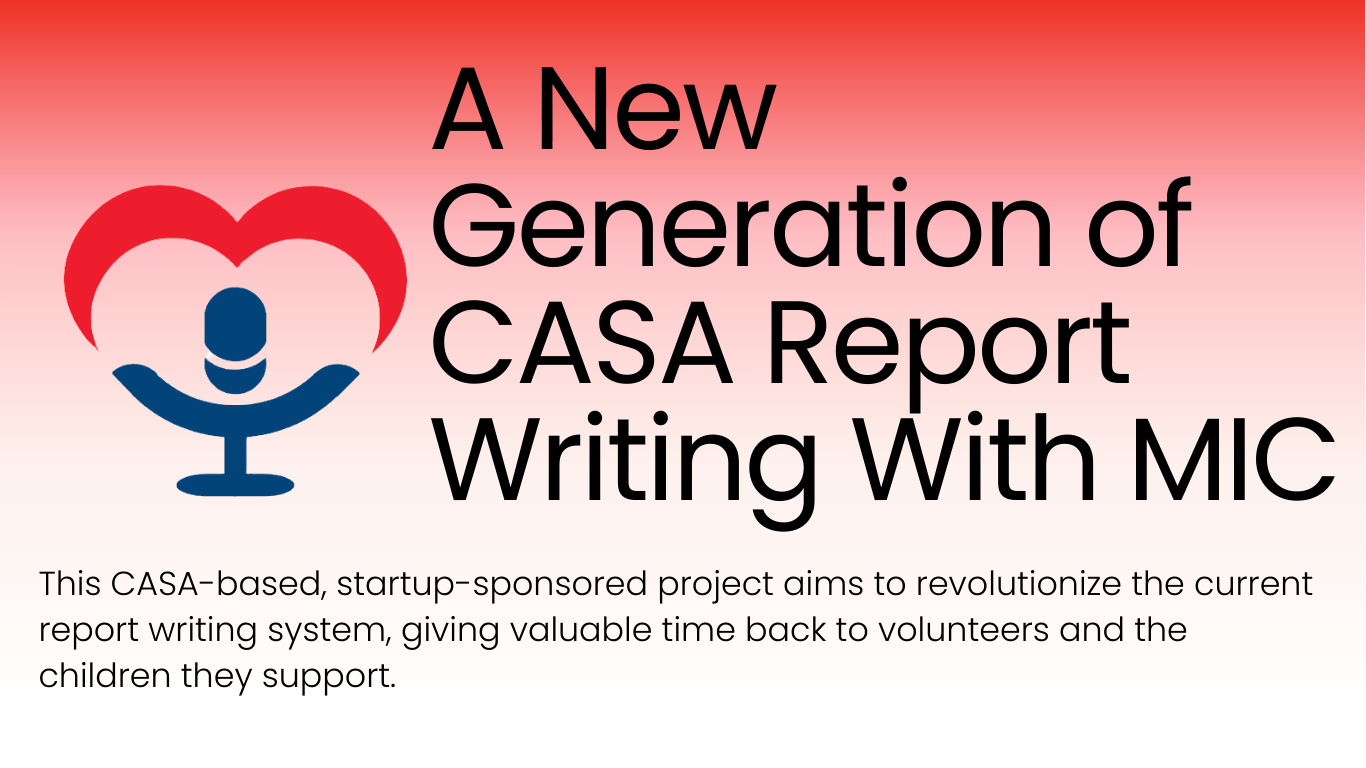
A group of 7 UX Design students collaborated to produce a UX research and design project for MIC, a CASA (Court Appointed Special Advocate) documentation startup, from August to December 2024, building on insights from previous semesters and a summer internship. We worked directly with CASA volunteers and employees, guided by our sponsor Landon Young.
My role
- Primary and secondary research
- User interviews
- Ideating and sketching
- Wireframing and prototyping
- Usability testing
Research outcomes
- High-fidelity prototypes of the MIC interface
- Increased usability consideration for older CASA volunteers and supervisors
The Problem
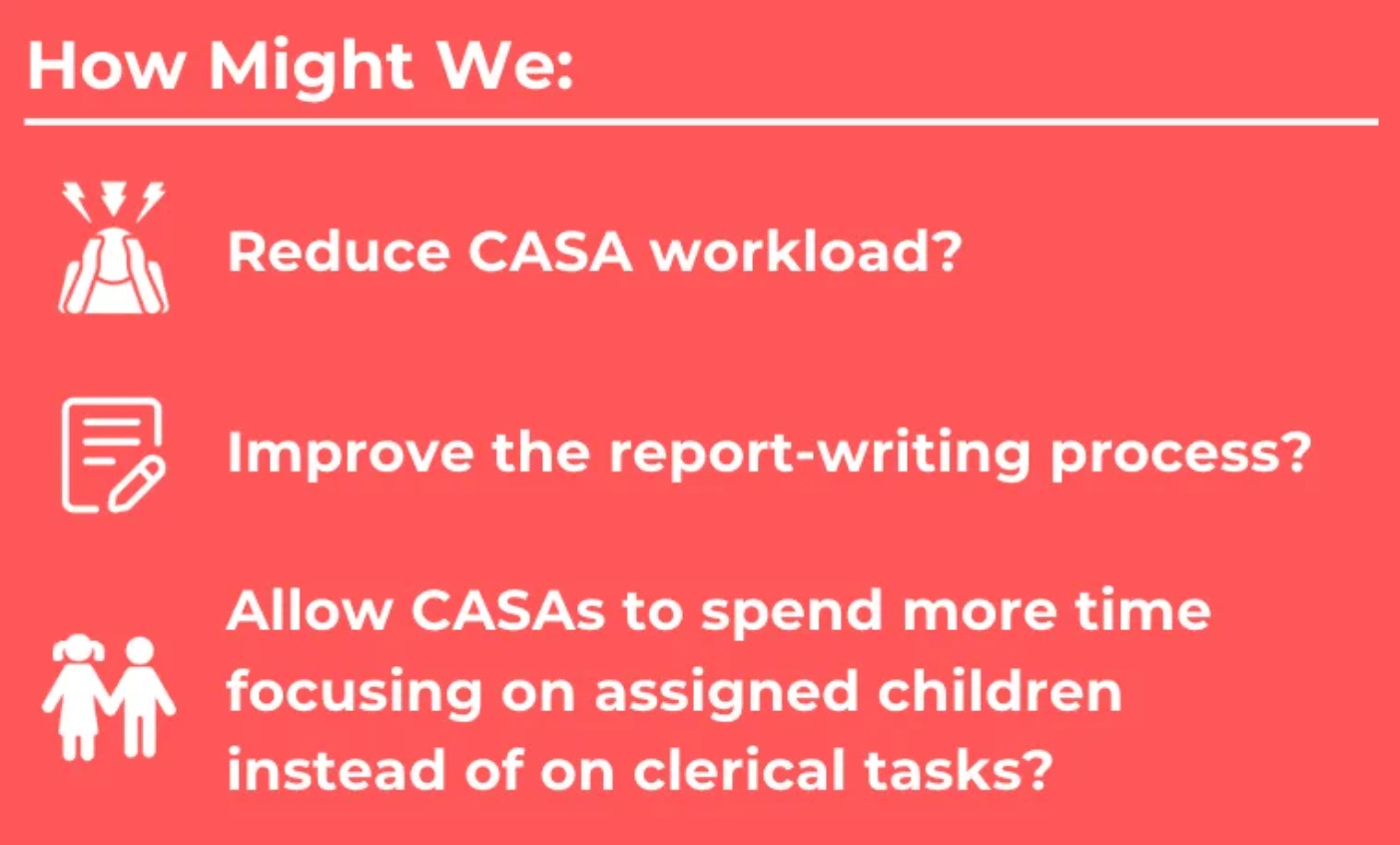
A Court Appointed Special Advocate is a trained volunteer who represents abused and neglected children in the child welfare system. In 2021, Indiana volunteers served 23,290 children, but many still lacked representation. We interviewed CASA staff and combined their input with secondary research to understand what was slowing volunteers down: an inconvenient case-management tool built only for uploading data, stress around writing reports, an inconsistent workflow spread across multiple disconnected tools, and reliance on third-party software like Microsoft Word to get the job done.
What We Designed
We ran sketching exercises like Round Robin and Crazy 6’s to bring ideas from our research to paper, then tested early wireframes with field volunteers before building toward high-fidelity prototypes.
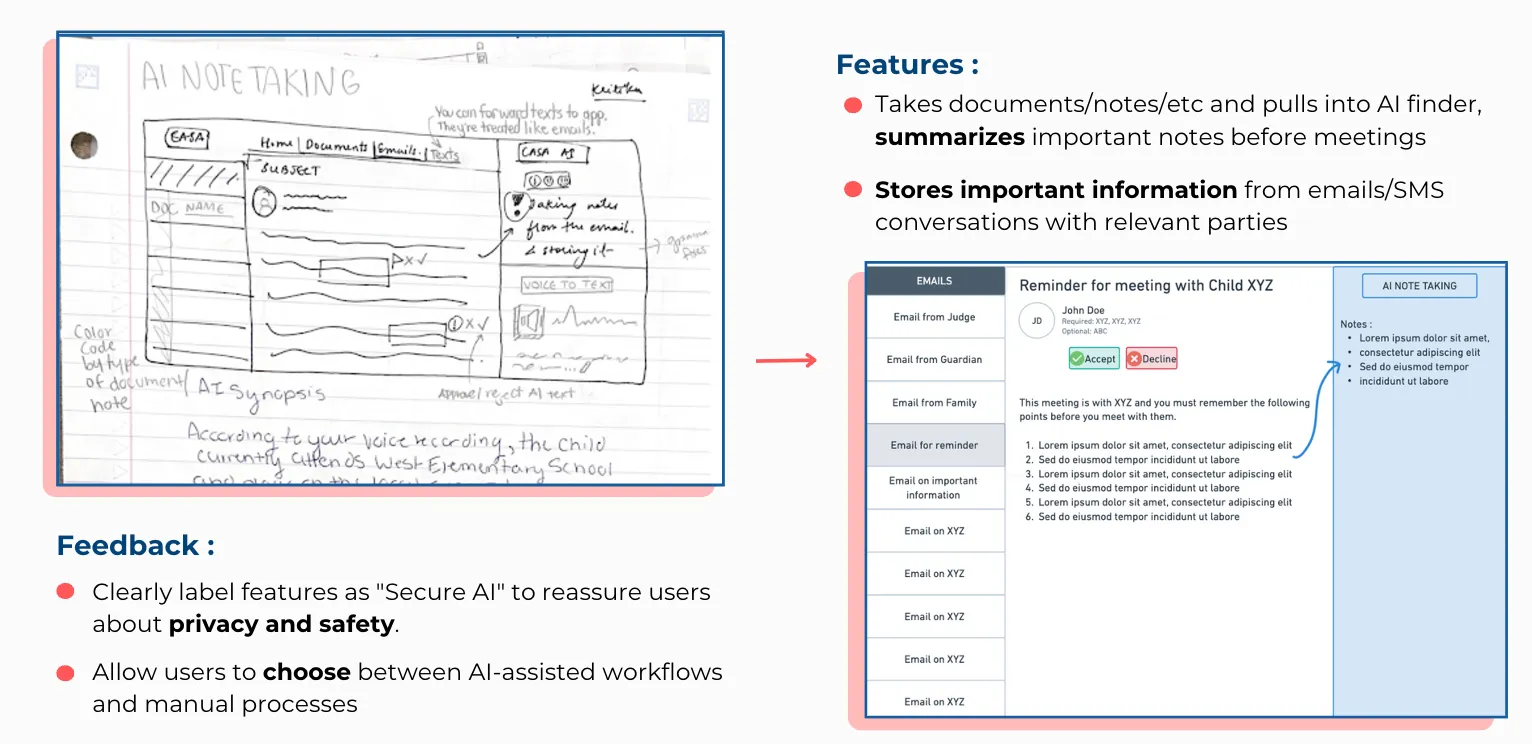
A design workshop with an active CASA volunteer surfaced additional insight: volunteers spend a lot of time on inefficient communication, would welcome AI assistance as long as it isn’t intrusive, still take a lot of notes on pen and paper, and care deeply about privacy. Our final high-fidelity prototypes aimed to streamline the report-writing process so volunteers could return more of their time to the children they support.
Looking Back
This was my first sponsored design project, and applying classroom concepts to a real, emerging startup helped me expand my design specialization. It also deepened my understanding of both UX design and research, and made me noticeably more proficient with tools like Figma and Whimsical along the way.